
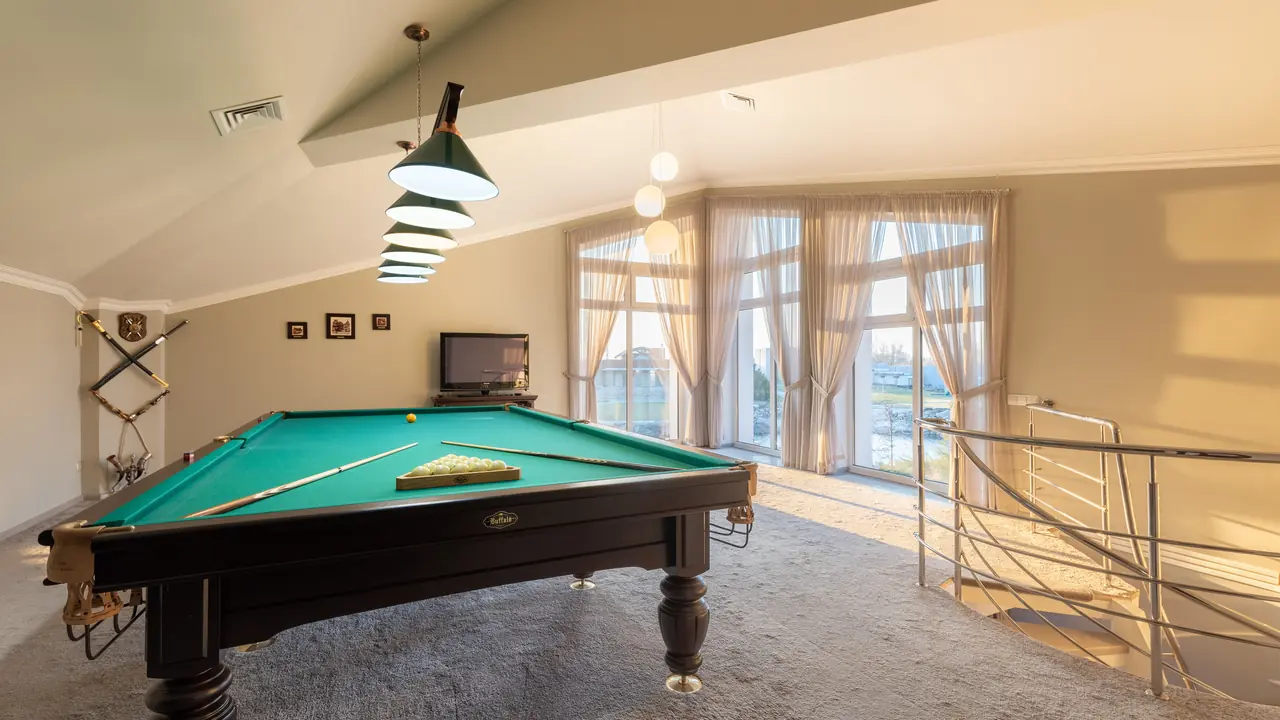
A pool table is not ordinary furniture with unusually heavy legs. Its construction, playing surface, cloth and receiving room all affect the job. Begin with the make or model if known, approximate size, photographs and access at both addresses.
A pool table needs more explanation than an ordinary dining table. Owners consulting moving services in Montreal describe its construction and access, then distinguish transport from the specialist work needed to make it playable at the new home.
A slate table often needs planned dismantling and careful reassembly. The appropriate method depends on the table. Do not assume it can be lifted intact, that every model separates the same way or that transport automatically includes all installation work.
Before the quote: describe the table and the route
Provide the table size, such as a known seven-, eight- or nine-foot model, without guessing. Identify slate or another surface if known. Send overall photographs and useful details of the underside, frame and access. Mention whether the existing cloth will be retained or replacement is being considered.
At both addresses, describe floors, number of steps, doors, stair turns and distance from the truck. A wide room does not establish that the approach through the basement stairwell is suitable. The team needs to assess the whole route.
1. Inspect and prepare before dismantling
The first stage is to identify the construction, condition and sequence of work. Make room around the table and remove unrelated objects from the working area. Record visible condition and discuss any existing issue before the pieces are taken apart.
Confirm who performs the dismantling and installation. The agreed job should distinguish the table transport from repair, cloth replacement and other optional work. One broad phrase such as “pool table move” can leave those responsibilities unresolved.
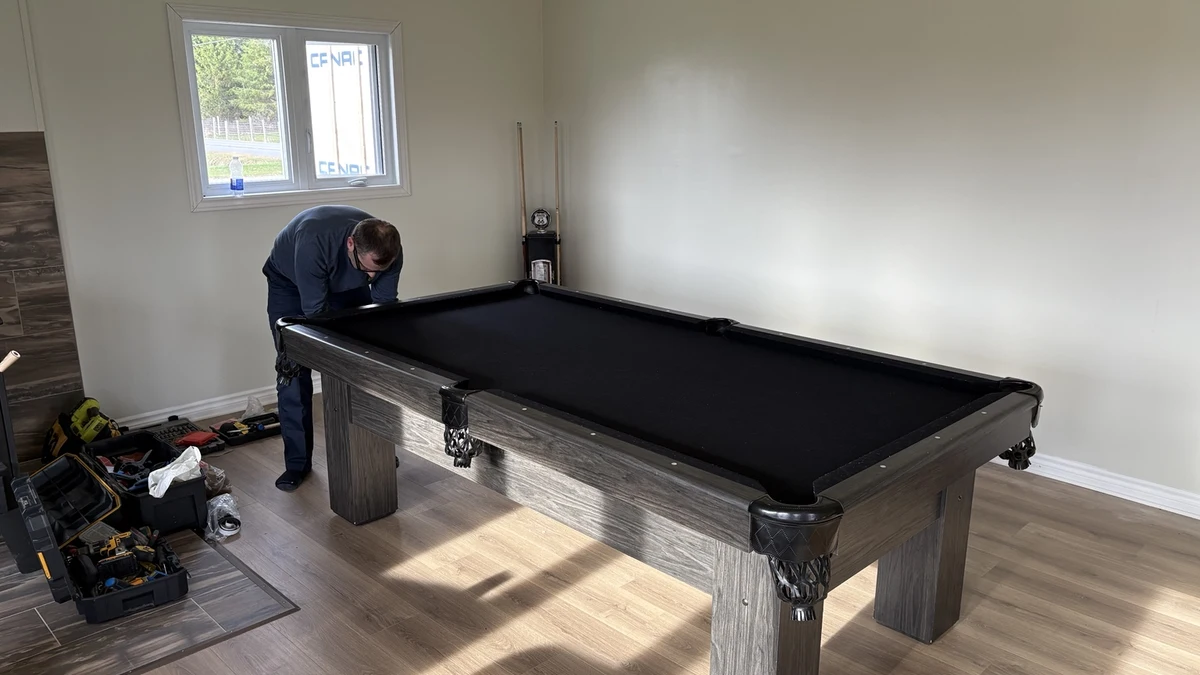
2. Remove rails, pockets and accessories methodically
Depending on the model, rails, pockets and associated parts are removed in a planned sequence. Hardware and components need identification so they can return to the correct position. Loose mixed fasteners make later assembly harder.
Keep accessories such as balls, cues and the rack separately identified. Do not leave small items where they can fall into packing material or disappear during loading. Ask the team which parts the household should prepare and which it should leave untouched.
3. Assess cloth removal and reuse
Handling the cloth affects the installation plan. Its condition, fastening and the intended work determine whether reuse is practical. Ask about that decision before the appointment, rather than treating every move as automatic cloth replacement.
If new cloth is requested, confirm the product and scope in advance. Repair, recovering and transport are related services, but they are not interchangeable inclusions. A clearly described option is easier to plan than an extra decision made after the table has been dismantled.
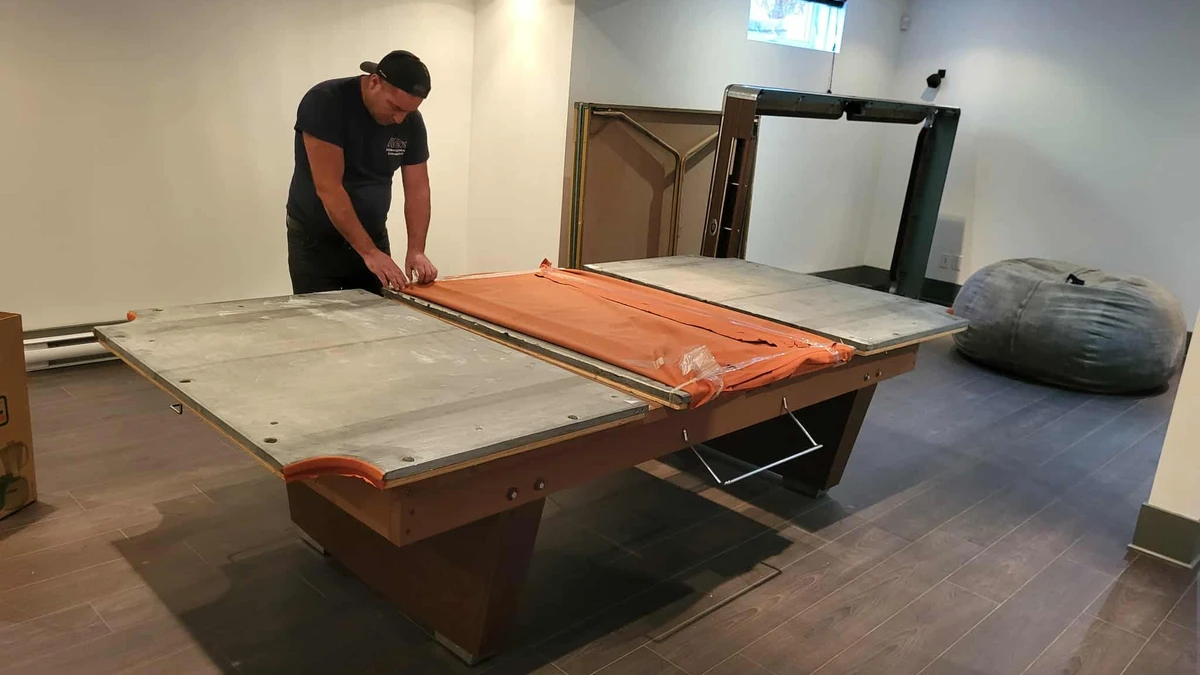
4. Handle the slate as a distinct operation
Slate is both heavy and vulnerable to damage. Construction may involve several pieces or another configuration. Its removal, support, protection and carrying route require an assessment suited to the actual table.
Do not use the assembled table as a trial to see whether several helpers can lift it. The required people and equipment follow the item and access assessment. A general article cannot prescribe a safe crew size for every slate section and staircase.
5. Protect and transport the components
The frame, rails, slate and small parts need protection and secure placement appropriate to their construction. Keep parts identifiable and prevent unrelated cartons from becoming mixed with installation hardware.
Confirm the loading route and clear the destination’s working area. Transport is only one stage: the receiving plan should leave enough room for assembly, not a table surrounded by unopened boxes with no place to work.
6. Reassemble, level and check the result
Reassembly puts the structure and playing surface back into a usable arrangement. Positioning and levelling are part of the installation discussion, rather than assuming the table is ready simply because every component is inside the home.
Confirm what final adjustment and checking the quoted work includes. Ask how an installation concern is reported after completion. Keep the service details and any condition photographs with the move record.
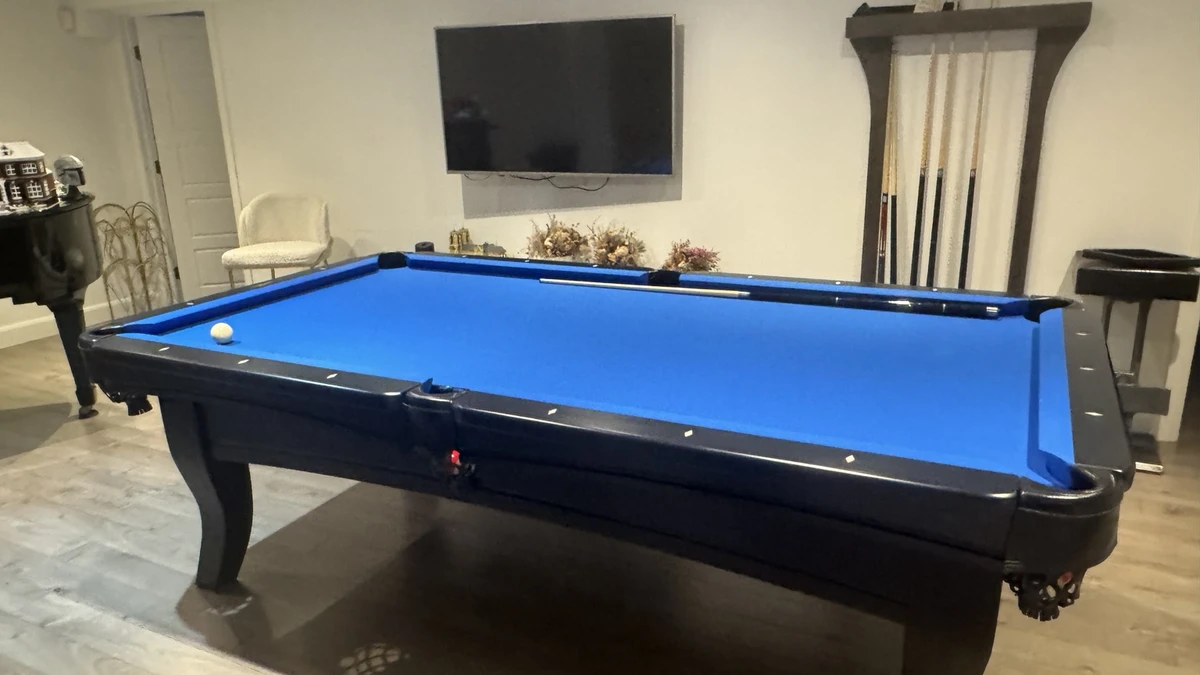
Check the receiving room before transport
Measure the intended table position and space around it for play. The dimensions of the table alone do not establish that a cue can be used comfortably. Doors, posts, walls and other furniture can change the practical layout.
Identify the exact position before assembly begins. Moving an assembled heavy table again because the room layout was never considered is a different task from deciding its location in advance. If the suitability of the floor or room is uncertain, obtain the appropriate assessment rather than assuming the transport team can resolve every building question.
What changes the scope and price?
The model, size, slate construction, access and requested installation work all matter. A straightforward ground-floor route differs from a tight basement stairwell. Several tables in a commercial space require their own inventory and receiving plan.
Déménagement ALEX’s moving services can be consulted for an assessment. Send photos of the actual table and access and ask for the dismantling, cloth work, transport, reassembly and levelling to be identified individually in the proposal.
A preparation record that prevents missed work
Keep five items together: table identification, condition photos, access measurements, intended receiving position and the written service scope. Mark uncertain facts as questions instead of guessing a model or construction type.
For a household considering new cloth, decide whether to request that option before booking. The quotation can then describe the selected installation rather than leaving recovering as an unpriced expectation. For the remaining furniture, use the general moving checklist.
Separate transport from the installation outcome
Write down what the household expects when the work is complete. Is the request for components delivered to the receiving room, a reassembled table, a levelled playing surface or additional cloth work? These outcomes involve related operations, but one phrase should not be expected to describe all of them automatically.
Ask the company to identify the included stages and any options. The resulting scope should let the household understand who prepares, who dismantles, who transports and who completes the installation. If another specialist is involved, clarify the handover and responsibility rather than assuming two bookings fit together without coordination.
Keep this record beside the table identification and access information. The service description becomes particularly useful if the receiving room changes or the household decides to request new cloth after the initial enquiry. A revised result should lead to an updated proposal rather than an unspoken expectation.
Photograph the table to answer assessment questions
Begin with an overall view showing the table and the space around it. Add photographs of accessible construction details and any known model identification. Describe what is known and leave uncertain facts as questions. A household does not need to dismantle the table merely to create an enquiry.
Photograph the carrying route separately: doors, stairs, turns and the receiving space. Where a dimension is important, provide the actual measurement and explain what it refers to. A photo of a doorway and an unexplained number may be less useful than a labelled measurement of the opening.
Record existing visible condition without presenting it as a technical diagnosis. If there is an issue with cloth, frame or another part, describe what the household observes and ask for the relevant assessment. Repair requirements should not be inferred from a distant photograph or silently included in a basic transport request.
Compare an easy-looking room with a difficult route
Consider a table in a spacious basement with a narrow stair turn. The working room may allow dismantling comfortably, while the route out determines how components can be carried. A quote based only on the room photograph would miss the decisive constraint.
At the destination, the opposite can occur: access is straightforward, but the intended table position leaves little working room or clearance for play. Both observations matter. The first concerns getting the components there; the second concerns installing a table the household can actually use.
These examples explain why two addresses and their complete routes belong in the request. Neither establishes a universal method or price. The actual construction, components and site determine the assessment, including any limitation that needs to be resolved before confirming work.
Make a cloth decision before it changes the appointment
If retaining the existing cloth is preferred, communicate that preference and ask about feasibility. Its condition and the work required may affect the answer. A preference is useful information, but it is not a guarantee that reuse will produce the desired result.
If replacement is being considered, request the relevant option and product information before the appointment. Confirm the work included and what decision is needed for preparation. This gives the team a defined installation to plan rather than an additional service introduced after dismantling has started.
Retain the distinction between transport and recovering in the written record. The household can then compare the chosen complete result with another offer on the same basis. Comparing a transport-only amount with a proposal including additional cloth work would otherwise favour the incomplete scope.
Prepare the receiving position before components arrive
Draw a simple room plan with the intended orientation, doorways and fixed obstacles. Include other furniture that will remain. The purpose is to decide where the table should be installed before the room is occupied by components and packing materials.
Consider the space needed around the table for its intended use, not just the footprint. If the household is unsure about a particular layout, raise that question before assembly. A table can fit physically while leaving a restricted playing position that disappoints the owner later.
Clear the agreed working area and the route into it. Ask what preparation is expected at the destination. An installation appointment should not depend on the crew unexpectedly emptying a room whose contents were absent from the quote.
Coordinate a commercial or multi-table project separately
For a bar, games room or another site with several tables, identify each table and its destination. Do not assume the first table’s construction describes every other one. Keep photographs and condition observations associated with the correct item.
Describe opening arrangements, working access and any other activity occurring in the space. A commercial receiving window can involve its own coordination, even when the physical route appears simple. Identify the person able to authorize placement and answer questions during the work.
Ask for the sequence and scope to be described for that project. Multiple tables can mean several installations rather than one repeated transport assumption. The inventory and site plan help establish what is being requested without inventing a standard crew size or completion time.
Complete a clear handover after installation
Review the work against the agreed scope with the appropriate person. Ask about any relevant instructions and the process for reporting an installation concern. Keep the service record rather than relying on a memory of what was said during a busy move.
Store accessories and spare identified components where they can be found. Do not discard packaging or a small hardware bag simply because the main structure is assembled without first checking whether it has a purpose. Where another service remains, record who completes it and the confirmed arrangement.
The best preparation connects the object, the route and the intended result. Photographs alone do not describe the whole service, and a price alone does not describe the finished table. Bringing those elements together lets Déménagement ALEX assess a specific request and lets the household know what it is choosing.
Prepare a single assessment message for the actual table
Combine the identification, overall photographs, construction details known to the owner and the complete access description. State which information remains uncertain. A clear question about the surface construction is more useful than an incorrect confident answer that sends the assessment in the wrong direction.
Add the intended result at the destination: transport, reassembly, levelling and any requested cloth work. Explain whether the receiving position is already chosen and whether another specialist is expected. These details help the company understand the whole request without inferring it from a generic description of a games room.
At confirmation, retain the final scope beside those images and measurements. If the household later changes rooms or addresses, send the revised route for assessment before the appointment. A table is the same object, but a different staircase can create a materially different job.
After the work, keep the identification and installation record for future use. The next move can begin with better information, although the new route and requested service will still need their own assessment. Reusing accurate table details is useful; reusing an old access assumption is not. This distinction helps the household prepare efficiently while ensuring each project is described for the place where it will actually happen.
Questions about pool table moving
Can the table be moved without dismantling?
The method depends on its construction, weight and access. Have the actual table assessed; do not assume an intact lift is appropriate.
Does every move require new cloth?
No automatic rule applies. Discuss the condition, removal method, reuse feasibility and desired result before confirming the work.
How many people are required?
That depends on the table, components, route and equipment. A general headcount cannot replace assessment of the actual handling.
Is levelling included in transport?
Ask for it explicitly in the written scope. Delivery, reassembly, cloth work and levelling should not be treated as identical services.