
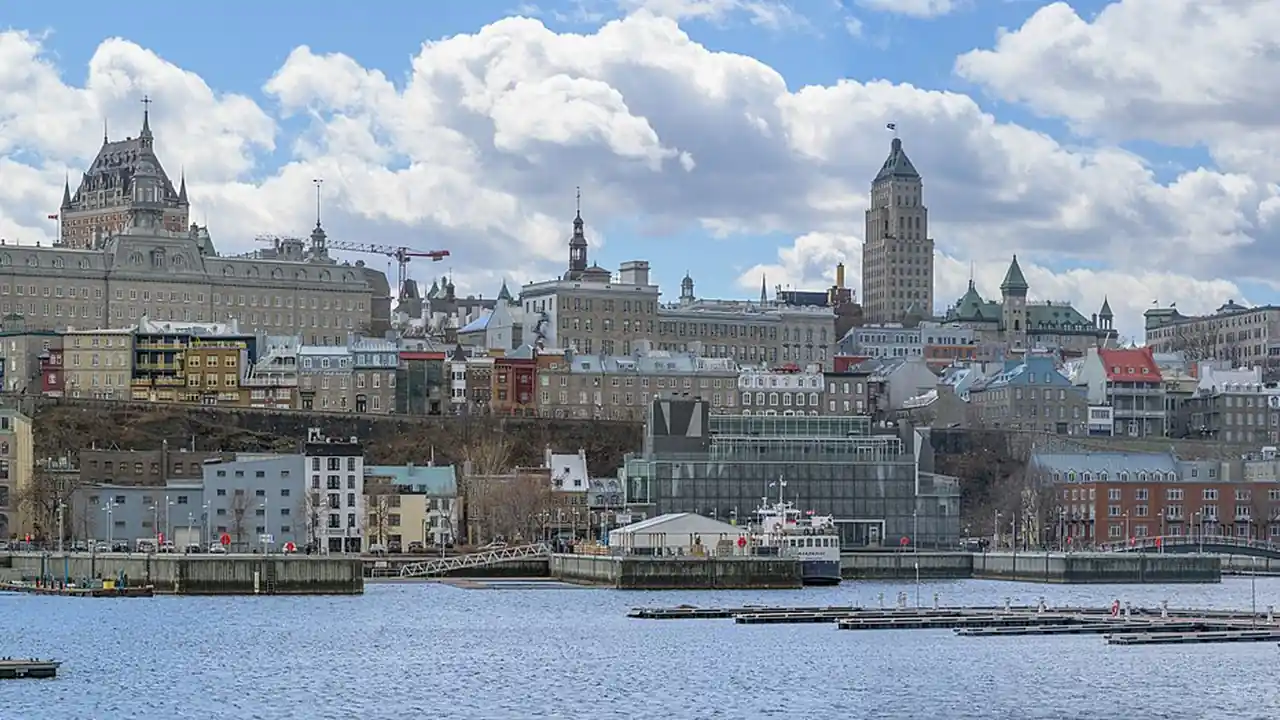
Start above the river, then follow the city down to its oldest streets. Québec City rewards a visit with a thread: a landscape to understand, a museum to explore or a neighbourhood to walk slowly. Fifteen places are useful choices, not fifteen obligations for one day.
Exploring Québec City and receiving a household load there are separate plans. Visitors considering a move from Montreal can use the trip to examine the intended home and its access, without treating a sightseeing itinerary as a delivery arrangement.
This selection covers Québec City and nearby outings. It is distinct from the guide to attractions across the province of Quebec, where distances require a much broader travel plan. Here, the aim is to combine compatible stops and leave room to enjoy them.
The numbered entries are not a quality ranking. Each gives an orientation point, a reason to visit and a planning detail. Follow the official links for current opening, tickets, access and programs. For clients settling into the region, Déménagement ALEX in Montreal provides the French homepage, while this guide offers ideas for discovering the surroundings after the practical work of arrival.
1. Dufferin Terrace: begin with the river
Orientation: Terrasse Dufferin, in front of Château Frontenac, beside Rue des Carrières. The hotel’s reference address is 1 Rue des Carrières; the terrace is an outdoor public place, not its reception desk.
The wide view helps explain the city’s setting before you enter a museum. Look across the St. Lawrence, then turn back toward the buildings and the changing levels of Upper and Lower Town. It is a good place to begin a visit with people whose interests differ.
Use the official Old Québec guide to connect the terrace with nearby streets. Treat hotel visits or guided experiences as separate arrangements. In exposed weather, shorten the outdoor portion rather than making the viewpoint a test of endurance.
2. Place Royale: pause where the streets open out
Orientation: Place Royale, reached from Rue Notre-Dame in Lower Town. This is a square, so a street-and-place reference is more useful than inventing a single entrance number.
Take time to look at the buildings surrounding the square and the scale of the streets leading into it. The attraction is the relationship between the place, its architecture and the history of settlement, rather than a single object to photograph and leave.
The destination’s Place Royale page supplies historical context. Read a little before arriving, then choose a nearby walk. Interior access to a church or other building should be checked separately from access to the square.
3. Petit-Champlain: make room for a slow street walk
Orientation: Rue du Petit-Champlain. The lower funicular entrance at 16 Rue du Petit-Champlain is a useful landmark, not a universal entrance to the whole district.
Small streets, shopfronts and the connection with the cliff give this area its character. Walk without making every business a required stop. Look at how the street bends and how the upper city appears above it.
Consult the official Petit-Champlain guide. Plan the return between Upper and Lower Town as well as the descent. Stairs, slopes and a paid transport option are different choices; check the current arrangement and the needs of everyone in the group.
4. The Citadelle: a fortress with a living role
Address: 1 Côte de la Citadelle, Québec City. The site is home to the Royal 22e Régiment and offers an opportunity to explore military heritage in its physical setting.
The reason to choose this visit is the connection between fortification, landscape and the institution occupying it. It provides a more focused experience than seeing defensive structures only as a backdrop to a walk.
Use the Citadelle’s admission and visitor information for current tours, language and entry arrangements. Do not assume a ceremony occurs on the day of your visit. Include the approach to the site in the plan, and allow the guided experience to determine what can be combined afterwards.
5. The fortifications: read the city through its edges
Starting point: Parks Canada’s Artillery Park visitor welcome centre, 2 Rue D’Auteuil. The wider fortifications have several access points.
Walls, gates and the route around them make the defensive shape of Old Québec easier to understand. Rather than walking every section, choose a stretch and ask what it protected and how it relates to today’s streets.
Parks Canada’s directions distinguish the visitor centre from the wider site. Check the season’s available experiences before relying on staffed interpretation. This stop pairs naturally with an Upper Town walk, but access to a particular interior or elevated section needs its own confirmation.
6. The Plains of Abraham: history with room to breathe
Visitor reference: Plains of Abraham Museum, 835 Avenue Wilfrid-Laurier. The park itself extends beyond this museum address.
Choose the Plains when you want outdoor space alongside historical context. A museum visit can explain events associated with the landscape; a walk lets the group experience its scale without treating the entire park as a single scheduled attraction.
Start with the Plains of Abraham’s official information and select the part that fits the day. A short route is a complete outing when it suits the group. Museum admission, activities and outdoor access are separate details, so check the element that actually matters to your plan.
7. MNBAQ: meet Quebec through its art
Visitor entrance: Pierre Lassonde Pavilion, 179 Grande Allée Ouest. This gives a useful arrival point for the Musée national des beaux-arts du Québec.
An art visit changes the pace after streets and monuments. Choose a collection area or current exhibition that interests the group, then leave time to look closely. Architecture can be part of the experience too, particularly when moving between the museum’s spaces.
The museum’s practical information covers current visitor arrangements. Check which galleries are available and whether a particular exhibition has separate conditions. One carefully chosen visit works better than trying to see everything before rushing to another ticketed stop.
8. Musée de la civilisation: give the day a question
Address: 85 Rue Dalhousie, in Lower Town. The museum is a useful option when the group wants an indoor experience built around society, culture and human stories.
Look at the current exhibition program before deciding what draws you there. A specific subject gives the visit a purpose and helps different generations find a shared question to discuss afterwards.
Use the museum’s official access information, then consult its current program and ticket details. It can anchor a Lower Town day with Place Royale or Petit-Champlain. Leave the street walk flexible if an exhibition holds the group’s attention longer than expected.
9. Morrin Centre: discover another chapter of Old Québec
Address: 44 Chaussée des Écossais. The Morrin Centre is an English-language cultural centre in a heritage building, adding another perspective to a visit through the old city.
Choose it when you want a more intimate cultural stop and an introduction to the building’s changing uses. The attraction is not simply a handsome interior: it is the opportunity to connect that interior with the community and history behind it.
Check the Morrin Centre’s official program for tours and visitor arrangements. A library, event and guided heritage visit may have different access conditions. Confirm the experience you want rather than assuming every room is freely open throughout the day.
10. Monastère des Augustines: choose a quieter encounter
Main reference: 77 Rue des Remparts. Le Monastère brings museum and heritage experiences into a setting associated with the Augustinian community.
This is a good choice for a visitor interested in objects, memory and the history of care rather than another broad panoramic stop. Let the museum’s interpretation provide the context, and leave enough quiet time to absorb it.
Consult the Monastère museum page and official arrival instructions. Museum admission, accommodation and other activities are distinct offerings. If step-free arrival or another access requirement matters, confirm the appropriate entrance directly before travelling. Do not infer the whole visitor route from a photograph of the building.
11. Observatoire de la Capitale: put the map together
Address: 1037 Rue De La Chevrotière, 31st floor. The elevated outlook is a different experience from the river-level streets.
Choose this stop when the group wants to understand how the city’s areas connect. After walking Old Québec, looking outward can help place the route in a wider urban landscape. It also offers a different way to enjoy a view without adding another long outdoor walk.
Use the Observatoire’s official visitor information and booking guidance. Check the day’s visibility before making the view the centrepiece of the outing. Admission and building entry arrangements deserve confirmation just as they do at a museum.
12. Aquarium du Québec: build a separate family outing
Address: 1675 Avenue des Hôtels. This is outside the compact Old Québec walking circuit and needs its own travel plan.
The Aquarium offers a change from the heritage-focused stops, with aquatic life and interpretation to explore. Let the current visitor program guide the choice of spaces, particularly if someone is excited about a specific exhibit.
Check Sépaq’s Aquarium information for operating arrangements, tickets and available facilities. Plan for both the route there and the type of time the family wants on site. Avoid attaching it to a full Old Québec day simply because both places are in the same city.
13. Montmorency Falls: follow the water, choose the route
Reference address: 5300 Boulevard Sainte-Anne. Parc de la Chute-Montmorency has different ways to experience the waterfall, so match the arrival point and route to the actual outing.
The attraction is the waterfall’s movement, sound and setting. A viewpoint-focused visit and a more active route are different plans; neither needs to be treated as the only proper way to experience the place.
Use Sépaq’s visit planner for current access and operating facilities. Stairs, cable-car service and other activities must be checked for the date and group. Keep this as a regional outing rather than an extension of a walk through Lower Town.
14. Musée Huron-Wendat: learn from the Nation’s institution
Address: 15 Place de la Rencontre, Wendake. This outing provides an opportunity to learn about Huron-Wendat heritage through the museum’s own interpretation.
Approach it as a cultural visit with its own perspective, not as a decorative addition to a Québec City itinerary. Read the museum’s description of the current experience and allow time for the subjects that interest your group.
The Musée Huron-Wendat website provides current activities and visitor information. Check guided-tour languages and the arrangement for any additional experience. Wendake requires a travel plan from the city; the museum address is not interchangeable with another attraction in the community.
15. Île d’Orléans: choose a few stops, not the whole island
Orientation point: tourist information office, 490 Côte du Pont, Saint-Pierre-de-l’Île-d’Orléans. This is a planning reference, not the address of every farm, village or attraction.
The island invites a different pace: villages, river views, heritage and local food producers. Pick a small number of places based on your interests rather than expecting to see everything during one drive.
Use the island tourism office and official business information to confirm stops. Producer openings and seasonal activities vary. Build the outing around confirmed destinations, with time to return, rather than treating the island as a single attraction with one opening schedule.
Turn the selection into a comfortable visit
Choose one anchor experience, then a nearby flexible complement. A museum and a short walk can create a satisfying day without several timed bookings. The following groupings are editorial suggestions, not transport schedules or promises of how long a visit takes.
| Focus | Anchor | Flexible complement |
|---|---|---|
| Lower Town | Musée de la civilisation | Place Royale or Petit-Champlain |
| Upper Town heritage | Citadelle or fortifications experience | Dufferin Terrace |
| Art and open space | MNBAQ | A selected Plains of Abraham walk |
Keep Wendake, the Aquarium, Montmorency Falls and Île d’Orléans as deliberate travel decisions. Before setting off, confirm the entrance, current opening, ticket arrangements, weather and access needs. For a household that has just moved, choose the shortest enjoyable version first; the other places will still be ideas for another day.
Choose between a city walking day and an excursion day
A useful comparison begins with two separate maps. On the first, group compatible Old Québec stops and mark the hills, breaks and any booked entrance. On the second, identify the actual starting point for a trip outside that walking area. Montmorency Falls, Île d’Orléans and other excursions should not be treated as small additions simply because they appear in the same destination guide.
For a city day, choose one principal indoor or guided experience and build the surrounding walk around its entrance and time. Allow the group to enjoy a street or viewpoint without a booking at every stop. Visitors with different energy levels can share the principal experience, then choose a shorter or longer route with a clear meeting place.
For an excursion day, confirm the means of reaching the chosen site and returning. A street address may identify a visitor centre rather than the precise entrance for your activity. Read the operator’s access instructions, especially where there are several levels, parking areas or meeting points. Keep the confirmation and route information available on a phone without relying entirely on mobile coverage.
Compare the two plans against the weather, the group’s walking preferences and the time available before departure. A family that wants a slower morning may prefer a compact city route; another group may reserve most of the day for one excursion. Both choices can be worthwhile. The important decision is to select a coherent day rather than treating all fifteen entries as obligations.
Frequently asked questions
Can all fifteen places fit into one day?
No. Several need a substantial visit or travel outside Old Québec. Choose a theme and compatible stops, then give the excursions that interest you most another day.
Do the addresses always identify the entrance to use?
Some identify a building, while others are orientation points or information locations. For a park, district or booked activity, confirm the entrance and meeting point for your plan with the official operator.
Where should prices and hours be checked?
Use each place’s official link and check arrangements for the date and experience you want. Guided visits, exhibitions and special activities may have separate bookings or admission.
What works for a first short visit?
A manageable Old Québec walk and one experience matching the group’s interests provide a simple starting point. Include breaks and the return journey before deciding on another stop.
Do suggested visit lengths include travel?
Time suggested on site is indicative. Add transport, hills, waiting, parking and meals. Adapt the margin to participants’ pace and accessibility needs.
Does every walk need a booking?
Public streets and squares differ from ticketed attractions. Book experiences that require it and check their instructions. Keeping free intervals allows time to enjoy the district without assuming every service operates without admission.