

Choose the destination and describe both addresses
Outaouais includes Gatineau, Hull and Aylmer. Québec, Lévis and the Chaudière-Appalaches area include destinations such as Saint-Georges, Sainte-Marie and Montmagny. Mauricie and Centre-du-Québec include Trois-Rivières, Shawinigan, Drummondville and Victoriaville. Estrie includes Sherbrooke, Magog and Granby.
For moving along the Montreal–Quebec’s regions route, choose thoughtful planning, careful handling and clear communication for a smoother moving day.
Plan longer regional routes
Laurentides and Lanaudière routes may involve slopes, smaller roads or winter access. Saguenay–Lac-Saint-Jean includes Chicoutimi, Jonquière, La Baie and Alma. Other destinations include Rivière-du-Loup, Rimouski and Matane in Bas-Saint-Laurent; Baie-Comeau, Port-Cartier and Sept-Îles on the Côte-Nord; Val-d’Or and Rouyn-Noranda in Abitibi; and Gaspé, Percé, Chandler and Sainte-Anne-des-Monts in Gaspésie.
Match the truck and services to the load
List boxes, appliances, furniture and storage items. Declare pianos, safes and other specialized items. Truck capacity and the crew depend on volume, access and booked services. Packing, dismantling and reassembly should be confirmed in the written quote.
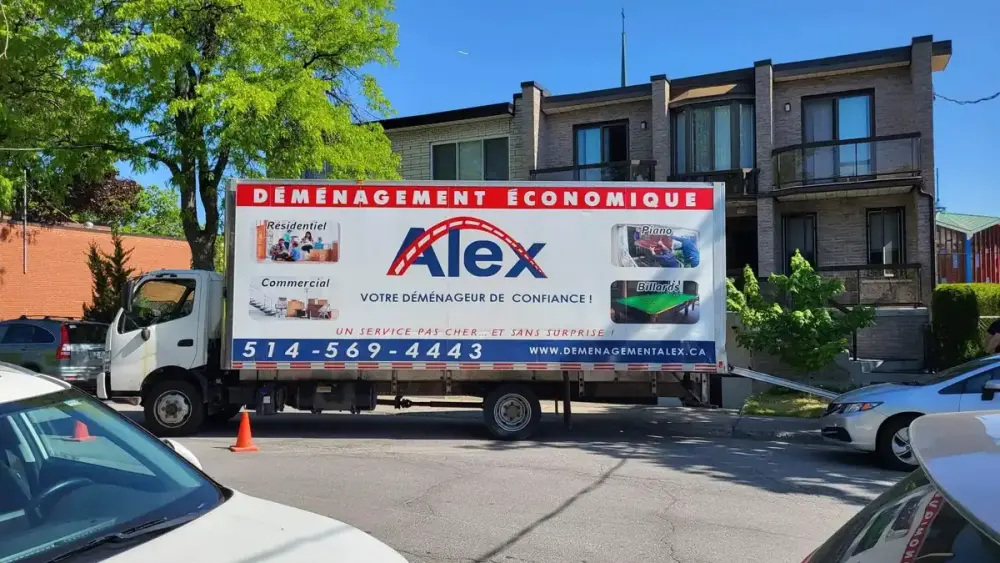
For moving in Montreal, share the full inventory and access details with Déménagement ALEX. Clear information helps prepare the crew, truck and services for your actual move.
Confirm delivery rather than assuming the timetable
Agree the collection and delivery windows with Déménagement ALEX. Same-day or next-day arrival depends on the route, load and arrangements. Give a reliable contact at each address and keep essential documents, medication and overnight supplies with you.
From a Quebec destination name to a workable delivery plan
Moving from Montreal to another Quebec region begins with the actual addresses, not only the destination city. A central apartment, a suburban house and a more remote property can share a regional label while requiring different receiving arrangements. Describe the dwelling, the load and each access point before treating a general price enquiry as a complete transport request.
The following worksheet approach complements the regional overview. It does not prescribe one arrival time, vehicle or price for an entire region. Déménagement ALEX can assess the proposed work from the information supplied and confirm the services and terms that apply to the actual project. Household travel, accommodation and official account changes remain separate preparations.
Identify the receiving address within the region
For Outaouais, give the actual address rather than treating Gatineau, Hull and Aylmer as interchangeable directions. A district name can help orientation but does not show the entrance, floor or loading position. If the household has several stops, name each receiver and the belongings assigned to that stop. An extra collection is part of the work to assess, even if it appears close on a broad map.
For Québec City, Lévis and Chaudière-Appalaches, identify the precise side and destination of the journey. The same principle applies to Mauricie and Centre-du-Québec: an enquiry mentioning Trois-Rivières or Drummondville does not describe every nearby property. Keep the municipal address and the actual receiving entrance together, particularly when building instructions use another door from the one shown in an advertisement.
For Estrie and the areas around Sherbrooke, Magog or Granby, record where the belongings will actually be delivered. The best-known city in a search is not necessarily the final stop. Include stairs, elevator arrangements, the carrying route and the person able to receive. These facts remain important whether the home is near a centre or elsewhere in the surroundings.
For Laurentides and Lanaudière, distinguish the locality and property from the region’s general image. A house or cottage photograph can help raise an access question, but it does not confirm what vehicle can reach the planned unloading position. Obtain the responsible person’s instructions and identify any receiving condition that still needs assessment. Do not turn an attractive road description into a handling assumption.
For destinations in Saguenay–Lac-Saint-Jean, Bas-Saint-Laurent, Côte-Nord, Abitibi-Témiscamingue or Gaspésie, discuss the delivery arrangement before promising an arrival hour to the household’s contacts. The transporter needs the actual itinerary and constraints. A regional name alone cannot establish a same-day service or a particular timetable; keep the proposed arrangement and its confirmation visible.
Build an inventory that explains the work
Group the inventory by room, then identify the major furniture, cartons, appliances and special items. Add the garage, locker, workshop or another collection area included in the request. A dwelling size provides a rough point of orientation, but it is not a substitute for the belongings actually present. Two homes with the same room count can produce different loads and preparation needs.
For large pieces, keep useful dimensions and photographs available. Record whether dismantling or reassembly is requested for the particular item. A statement that furniture can be taken apart needs to connect with an actual model, condition and agreed task. Declare a piano, pool table or another item needing special assessment rather than leaving it inside an ordinary furniture total.
Give each group a destination. Some belongings may go to the new home, another receiver or storage. Keep that assignment on one current list. An object intended for a relative is not automatically excluded from transport until the handover arrangement is clear. If it remains at departure, report the change instead of assuming it can simply join the load without affecting the plan.
Describe both carrying routes
For Montreal departure and Quebec-region arrival, record floors, stairs, elevator bookings, the moving entrance, vehicle position and carrying distance. The route begins where the belongings are located and ends where they can be received, not at the two municipal boundaries. Photographs of an uncertain turn can support assessment, while measurements and current building instructions provide the practical detail.
Keep street access distinct from internal building arrangements. An elevator confirmation does not establish that the proposed vehicle position is available, and a parking arrangement does not open a locked building. Ask the appropriate contact about each issue and identify who handles any necessary procedure. Follow the applicable municipal information for the address rather than copying an unrelated location’s rules.
At a property with a particular access condition, describe what is known and what remains uncertain. Do not present a hoped-for route as confirmed. The transporter can assess a clearly stated question more usefully than discover a restriction after the load has arrived. If the arrangement changes, send the revised facts together rather than several isolated messages.
Compare the complete services in each offer
Use the same inventory and addresses when comparing proposals. Identify the crew, vehicle arrangement, preparation tasks, stops and delivery stages described in each. A lower amount is not directly comparable when it covers less work or leaves the receiving arrangement unresolved. Ask what is included before assigning a financial advantage to one option.
Clarify how a change in load, access, waiting or an added stop would be assessed. Retain the accepted description and any agreed revision. The purpose is not to predict every event but to give an actual process to the changes that could affect the job. The provincial consumer-protection office’s moving guidance provides an official reference for questions about using moving services.
Keep equipment or installations outside the ordinary transport scope identified. Delivery of a piece does not automatically include every task required to make it usable. Discuss the actual assembly, connection or specialist work wanted and obtain the appropriate confirmation. The final review should refer to those services, rather than a broad phrase such as everything included whose meaning has not been established.
Prepare the household’s journey separately
The occupants need their own travel and, where relevant, accommodation arrangement. Their arrival may not follow the furniture vehicle’s program exactly. Keep identity documents, personal necessities, chargers and the next morning’s essential belongings accessible with the responsible person. An item being present somewhere in the load is different from the household being able to use it during an intermediate stage.
Children, animals and accompanied travellers require arrangements appropriate to their needs. Do not infer these from the furniture itinerary. Ask the relevant providers or professionals about any particular personal transport or care question. The moving coordinator needs practical access and receiving information, not unrelated private account or personal documents.
If someone travels ahead, establish what is already available at the destination. If someone remains at departure, identify the keys and contact needed for the final handover. A simple division of responsibility prevents both people from assuming the other has completed an essential task. Give each unresolved question a named follow-up before departure.
Organize a receiver who understands the load
The receiving person needs the agreed arrival arrangement, keys, building instructions and current inventory. Confirm their availability rather than relying on a phone number alone. Make clear what decisions they can take and how to contact the household or coordinator when a new question appears. Someone receiving as a favour still needs a practical briefing.
Use room names that match the carton labels and a simple position plan for the large furniture. A short tour while the carrying route is clear can prevent repeated moves caused by different meanings of the back room. Keep first-night cartons identifiable without blocking entrances or shared spaces. The receiver should know which belongings are expected at this stop and which are assigned elsewhere.
If a piece does not fit as expected, describe the situation before changing the handling plan. Provide available measurements or alternatives and clarify proposed work. The team should not need to guess a household’s furniture priorities. A calm, specific question is more useful than several incompatible instructions from people in different locations.
Make a temporary stage a defined part of the project
Where immediate delivery is not available, identify the proposed storage or intermediate arrangement before the departure becomes urgent. Storage, delayed delivery and a further collection are different operations. Check their conditions, receiving process and inventory arrangements. Do not assume that one confirmed stage automatically establishes the next.
Keep stored belongings separate on the list from cartons already present at the new home but not yet opened. Update the record after each transfer. The household should be able to identify what arrived, what remains elsewhere and who can answer the next question. This matters when a project takes more than one day or includes different receivers.
The personal essentials plan should cover the actual interval being organized. Confirm the accommodation and ordinary meal and sleeping arrangements separately from the furniture. If a later stage changes, update both the transport and household plans. Solving only one timetable can leave the other part of arrival unusable.
Review the final version before departure
Bring the date, addresses, inventory, access and contacts into one current record. Mark confirmed facts separately from questions awaiting an answer. Report an added piece, changed receiving window or new stop together, and ask for confirmation of the proposed revision. A change sent to one person should not be assumed to have reached everyone affected.
At delivery, compare the received items and agreed remaining tasks with the record. Keep condition photographs and documents available for appropriate follow-up, and ask about an unclear invoice line using the accepted scope and documented changes. Completion should mean the services actually agreed, rather than an assumption that every household task disappears when the truck is unloaded.
This process works across different Quebec destinations because it starts with the real project. The household gains a load that can be described, a receiver who can act and a clear set of remaining questions. The region gives geographical context; the addresses, access and agreed services make the move concrete.
Keep the final confirmation usable during the journey
Save the agreed inventory, delivery arrangement and contact numbers where they can be consulted without unpacking a computer. Share the latest version with the person receiving the load. If a building contact or access instruction changes, send one clear correction and ask the relevant participant to confirm receipt. Avoid relying on an old message that names a different door or arrival window. The useful document is the one that describes the actual move being carried out.
For a household whose members travel separately, agree who carries the keys and who can make decisions at the receiving property. A contact who is still on the road may be unable to open a building when needed. Keep the receiving person’s number in the final confirmation and explain the room labels used on the cartons. If belongings have different destinations, identify them before loading rather than expecting the driver to reconstruct the household’s intentions from similar-looking boxes.
FAQ: Moving from Montreal to Quebec’s regions
Is the price based only on distance?
The quote also depends on volume, access, crew, services and timing. Send Déménagement ALEX the same complete information when comparing options.
Can delivery take place the same day?
It depends on the destination and the agreed plan. Confirm the delivery window before booking.
What information is needed for a regional move?
Provide both complete addresses, date, inventory, floors, elevator and parking details, specialized items and requested services.
How can I discuss my move with Déménagement ALEX?
Before booking your Montreal movers, send Déménagement ALEX your addresses, inventory, preferred date and access information. Confirm the services and booking conditions in the detailed quote.