
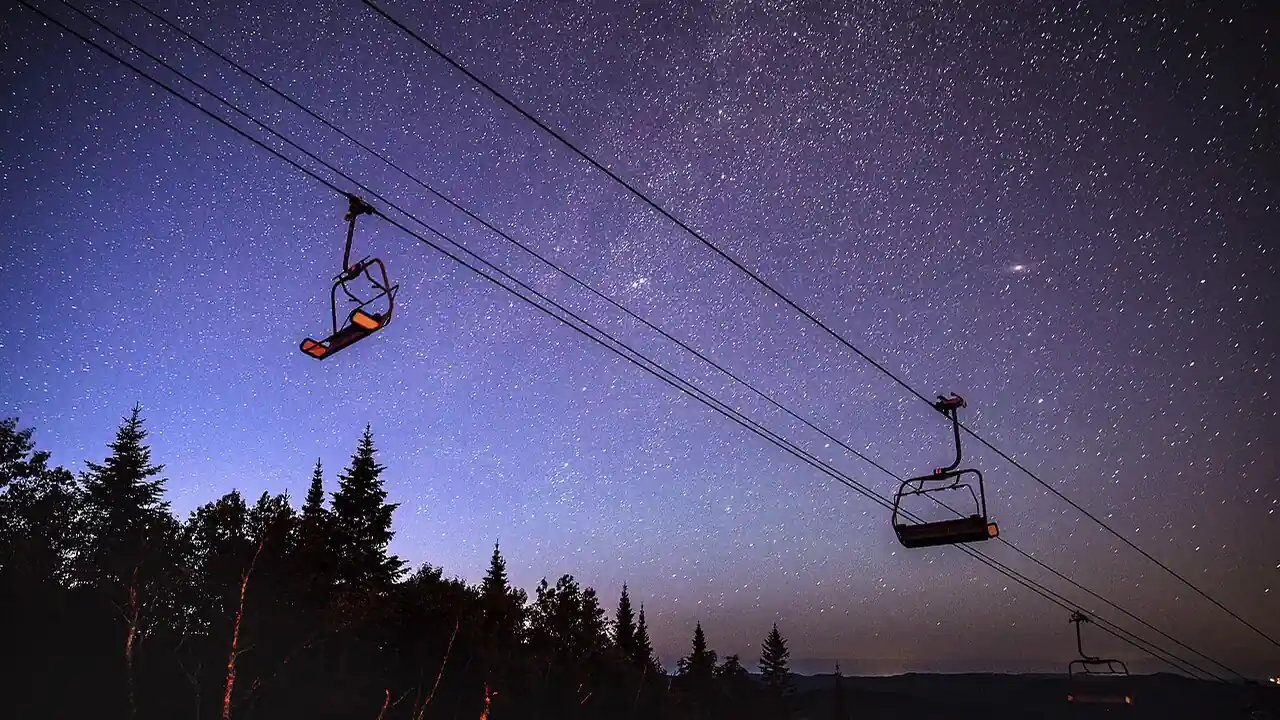
A winter weekend in Mont-Tremblant can begin with skis, but it does not have to revolve around them. A quiet forest route, a cross-country outing or time in the older village can give the same landscape a different rhythm. The useful question is which kind of winter day the group actually wants.
These ten ideas help build that choice. They are alternatives to assess, not a promise that every activity operates on every winter date. Use the linked operators for the selected service, current conditions, access and booking. The pedestrian resort village, the older Village district and the national park are different destinations.
For households exploring the region before relocation, Déménagement ALEX’s Montreal moving teams can assess a separate moving project. Keep the holiday itinerary and the confirmed furniture-delivery arrangements distinct.
1. Give a ski day enough room to be a ski day
Choose skiing or snowboarding as the principal activity rather than an interval between several unrelated reservations. Check the resort’s current operating information, ticket product and equipment arrangements through Tremblant’s official website.
Build the morning around the actual starting instructions: accommodation departure, the appropriate access point, equipment collection and any booking. A general resort address is not necessarily the meeting point for a lesson or another service.
Match the outing to the people participating. A group with different experience levels may need separate plans and an agreed reunion point. A comfortable lunch or finish can be part of a complete day without adding another strenuous activity afterwards.
2. Make a lesson the centre of a first snow-sports visit
A beginner’s day needs a different structure from an experienced skier’s day. Consult Tremblant’s snow-school information for the actual lesson options and conditions.
Check the participant category, language, timing, meeting point and what is included in the selected product. Identify any equipment or access that needs a separate arrangement. Do not assume an attractive package name answers all of those questions.
Leave space before the start rather than booking another appointment immediately beforehand. Afterwards, let the participant’s experience determine the rest of the day. Learning something unfamiliar can be the whole purpose of the outing, with a quieter evening as its natural conclusion.
3. Explore a snowshoe route at Domaine Saint-Bernard
Address: 539 Chemin Saint-Bernard. The Domaine offers winter outdoor experiences within a protected natural setting. Use its official visitor information to check the route, conditions and access for the planned visit.
Choose an itinerary according to the group and actual day rather than selecting the longest line on the map. Confirm the equipment appropriate to the designated route and whether rental arrangements are needed.
A small observational purpose can make the walk memorable: compare the appearance of different trees or notice how the landscape changes along the route. Keep wildlife observation respectful and follow the Domaine’s instructions, including its prohibition on feeding animals.
4. Choose cross-country skiing for a different winter rhythm
Domaine Saint-Bernard also provides a cross-country skiing option. Its skiing page is the appropriate starting point for the current network and visitor arrangements.
Check the technique, trail suitability, equipment and conditions relevant to the group. A familiar activity name does not establish that every route suits a first attempt or that rental equipment will be available without confirmation.
Allow time for preparation and a route that the whole group can manage. Keep a clear return plan and avoid making a later reservation depend on an optimistic finish time. The outing can remain worthwhile when the distance is modest and there is time to enjoy the setting.
5. Visit the national park as its own destination
Parc national du Mont-Tremblant is a separate outing from the resort. Sépaq’s official park information identifies its sectors and visitor arrangements. Choose the sector and access before starting the journey.
For an outing involving the La Diable sector, consult the current winter activities and trail information rather than treating a summer route as an all-season recommendation. The activity, equipment and conditions need to match.
Give the park enough space in the day. A name shared with the region does not mean its visitor points are beside the accommodation or resort entrance. Confirm the actual destination, the return journey and what services will be available when the group arrives.
6. Consider winter biking through the appropriate local network
The tourism office describes winter biking among the activities associated with the Village district. Use the official Village information to begin checking the relevant network and providers.
Confirm the route designated for the activity, present conditions and suitable equipment. A route open for one use should not be presumed open for every other winter sport.
If renting, obtain the actual collection and return instructions. Keep the plan within the group’s experience and the operator’s guidance. The purpose is to choose a winter activity that fits, rather than add another unfamiliar sport because it appears on a list.
7. Explore the older Village beyond the resort image
The Village district offers another perspective on Mont-Tremblant. The tourism office identifies its historic character, former train station used as an exhibition centre and connections with local outdoor routes.
Choose a modest exploration of the district and check any exhibition or cultural activity through its current listing. An old building’s presence does not establish the opening hours of the service inside.
This can be a useful day for visitors interested in how the area feels outside a resort-centred itinerary. Leave time for a simple meal or pause, and check the actual walking conditions. A quieter plan is a positive choice, especially when other days already contain substantial outdoor activity.
8. Check skating as a date-specific activity
Skating is another winter possibility described by the local tourism office. Verify the actual rink or designated facility and current municipal or operator information before making it the reason for the trip.
Check opening, conditions, equipment and any applicable admission or registration requirements. Winter temperatures alone do not establish that a facility is ready or open.
Keep the outing short enough for the participants’ comfort and abilities. Plan an appropriate warm break and a return arrangement. Avoid substituting an unverified frozen surface for an established skating facility; the intended activity needs a confirmed location, not simply a photograph of winter scenery.
9. Reserve a quieter spa interval if it suits the group
Reference address: Scandinave Spa Mont-Tremblant, 4280 Montée Ryan. The operator’s contact and visitor information provides the starting point for the actual service.
Check the current access conditions, participant requirements and reservation terms directly. Ask about any question relevant to the person attending rather than relying on an older description of the experience.
Plan it as its own interval, with enough room for arrival and the return journey. It can provide a different pace from a sports day, but no medical benefit or universal suitability should be assumed from a travel article.
10. Leave room for a pedestrian-village afternoon
An afternoon in the pedestrian resort village can offer a less equipment-heavy part of the weekend. Choose the shops, meal or current activities that interest the group through the resort’s visitor information.
Distinguish browsing from a booked activity. For an excursion arranged through a provider, obtain the real departure instructions. The Activity Centre’s contact page explicitly distinguishes its office address from the starting location of activities.
Keep this part of the trip flexible. A family or mixed group can agree on a meeting point and a comfortable finish instead of trying to keep every person on the same shopping or activity schedule.
Connect the right destination with the actual booking
Put the provider, activity, date, meeting point and confirmation together. Mont-Tremblant is a wider destination than one pedestrian street, and the name alone is not enough to direct a driver or identify a starting point.
Check what the selected product includes. Equipment, admission, instruction and transport can be separate parts of the arrangement. Record unanswered questions before paying for another activity that depends on them.
For each outdoor day, review the operator’s current conditions and notices, the forecast and the group’s needs. Keep an appropriate alternative without treating a closure as an invitation to use an undesignated route.
Check the return journey as carefully as arrival. A comfortable evening depends on where equipment is returned, when transport is available and how the group gets back to its accommodation.
Three winter days with different priorities
| Priority | Principal plan | Flexible complement |
|---|---|---|
| Learning a snow sport | A confirmed lesson and the required preparation | A simple meal and a quiet finish |
| A forest outing | A suitable designated route with conditions checked | A short Village visit if the group wishes |
| A gentler pace | A Village exploration or booked indoor interval | A modest outdoor walk where appropriate |
These are editorial combinations, not schedules or packages. The right mix depends on the participants and the actual arrangements. One well-chosen experience can make a complete day.
Before leaving for a winter weekend
Confirm accommodation, arrival instructions, parking or transport and the booked activities. Keep the current references accessible rather than depending on several screenshots with unclear dates.
Prepare clothing, personal necessities and equipment according to the activity and appropriate guidance. A winter walk, a ski lesson and an indoor visit have different practical needs.
If the trip is also being used to explore a possible move, give that purpose its own time. A holiday setting can be enjoyable without answering every question about ordinary work, shopping, housing and travel.
For a different season, the Mont-Tremblant weekend guide helps compare a broader range of outings. Keep each itinerary connected to the time of year rather than treating summer and winter access as interchangeable.
Make a mixed group work without giving everyone the same day
A winter group may include an experienced skier, someone taking a first lesson and another person who would rather explore the Village. Begin by asking what each person wants from the trip. A shared accommodation does not require an identical activity schedule.
Identify which bookings involve the whole group and which are individual. Keep the meeting point, transport and return time for each arrangement clear. The person leaving for an early lesson should not accidentally take the only key needed by someone staying behind.
Choose one realistic reunion rather than several tight handovers. A meal can connect different experiences, provided the timing leaves room for equipment return and travel. Treat a proposed finish as an estimate until the actual provider’s schedule is known.
For children or anyone needing supervision or particular assistance, establish the appropriate responsible person and confirmed arrangement. Do not assume an activity provider, hotel or another group member will supply that role without agreement.
Keep spending decisions equally clear. List the actual accommodation, activity and transport offers, then identify personal extras separately. Avoid assuming all participants want the same rental, lesson or additional activity. A group can share the weekend while making different choices about its individual parts.
Finally, leave a simple plan for a cancelled or unsuitable outdoor session. The alternative might be a shorter local visit or a quieter interval at the accommodation. It should not depend on finding an unconfirmed replacement activity at the last minute.
This approach gives the group a common structure while preserving the reason each person came. It also makes the weekend easier to adjust when the weather, energy or current conditions suggest a smaller plan.
Treat the return as part of the winter experience
Before booking a winter outing, connect the actual start point, equipment arrangements, route and return. A resort address and a trail-network entrance may be separate places. Check the operator’s current opening, designated use and condition notices for the chosen day. Do not rely on the appearance of a snow-covered photograph to establish that an activity is available.
Choose a realistic principal experience for the group, then leave time for food, clothing changes and the journey back. Participants with different interests can choose alternatives without every activity needing to happen simultaneously. Agree on a meeting point and a way to communicate that does not depend on one person being immediately available throughout the outing.
If conditions change, follow the operator’s instructions and revise the day. A closure is not an invitation to find an informal entrance. A quieter activity near the accommodation can be a complete alternative after its arrangements have been checked. These planning choices preserve room to enjoy the stay without turning the original list into an obligation to continue regardless of conditions.
Questions about visiting Mont-Tremblant in winter
Does a winter visit have to include skiing?
No. Choose among the confirmed activities that suit the group, from designated outdoor routes to Village exploration or a quieter booked interval.
Is the national park the same destination as the resort?
No. Identify the actual park sector or resort meeting point and check its access separately.
Can trail access be assumed throughout winter?
Check the operator’s current notices and designated uses. Conditions and seasonal preparation can change access.
Where should an activity meeting point be confirmed?
Use the provider’s actual booking instructions. An office or general resort address may be different from the activity’s departure location.