
Offices and workstations
Count desks, chairs, meeting tables, storage cabinets and packed records. Identify modular furniture and anything that needs disassembly. Share the destination room or workstation numbers before the crew starts loading.
DÉMÉNAGEMENT ALEX · YOUR NEXT WORKPLACE
An office move, a shop relocation or a new professional space. We help you organize the furniture, equipment and access around the way your business needs to work.
Offices · Shops · Professional spaces · Furniture and equipment
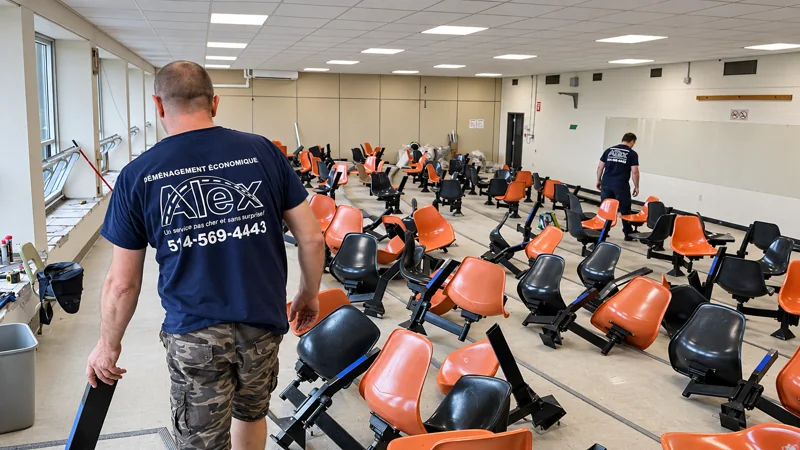
Your business needs more than a change of address. It needs a workable restart. Desks must reach the right rooms, equipment must be identified and the people receiving the delivery need to know what comes first. At Déménagement ALEX, your Montreal moving company, we work through those practical details with your project contact before the truck arrives.
Tell us what is moving, when the premises must be vacated and which areas need to be ready first. We can organize packing, furniture work, transport and placement as part of the agreed service, whether you are relocating a downtown office, a shop in Laval or a professional practice on the South Shore.
The moving date is one part of the schedule. Your reception desk may need to reopen before the archive room is arranged, while your technical team may need access to certain workstations before other furniture arrives. Explain those priorities at the start so loading and delivery follow a useful sequence.
Choose one project contact who can answer questions about the inventory, access and destination layout. Give that person the current floor plan and a clear way to reach the people responsible for each building. A decision about a room or loading area should not depend on finding someone who has already left the premises.
If the business cannot pause all activity at once, describe the departments or areas that could move separately. We can discuss a phased transfer against the volume, building windows and available resources. Planning in stages can help organize disruption; it does not eliminate the preparation or technical work needed to restart.
Two businesses occupying the same floor area can have very different loads. A meeting room with tables and chairs, a shop with displays and stock, and a practice with records and specialist equipment need separate handling descriptions. The square footage is useful context, but it is not a list of what will go into the truck.
Count desks, chairs, meeting tables, storage cabinets and packed records. Identify modular furniture and anything that needs disassembly. Share the destination room or workstation numbers before the crew starts loading.
Include counters, display units, back-room furniture and the inventory actually moving. Explain delivery restrictions and when the premises must remain accessible to staff or customers. Describe heavy or delicate devices separately.
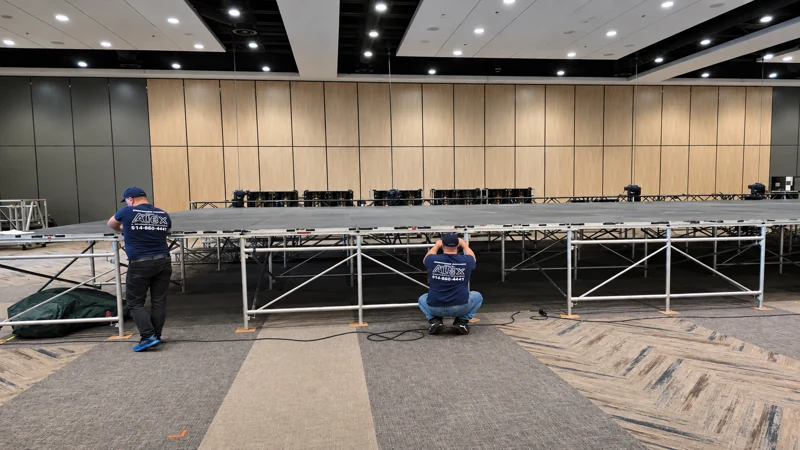
Training rooms, associations and larger facilities may involve repeated furniture, storage rooms or large structures. Group the items by destination area and provide photos, dimensions and known weights for unusual equipment.
Build one inventory for the entire transfer, rather than separate informal lists held by several staff members. Include the cupboards, meeting rooms, reception, storage areas and equipment kept outside the main office. Mark items that will be sold, collected by a supplier or left in place.
Number workstations consistently. A label such as “Floor 2 — Office 07 — Desk A” is useful only if the same destination appears on the plan. Put the matching identifier on the furniture, boxes and removable components. Keep hardware with the relevant item so a desk is not waiting for a bag of fittings from another department.
As an illustrative inventory, a small office might list 12 desks, 12 chairs, two meeting tables, four cabinets and 30 packed boxes. That list still needs dimensions, access details and furniture-work instructions; it does not establish a moving duration or a fixed price. Photos can supplement the inventory, with confidential documents and screens kept out of view.
| Category | Details to provide |
|---|---|
| Furniture | Quantity, dimensions, destination and disassembly needed. |
| Boxes and records | Approximate count, destination labels and the receiving contact. |
| Electronic equipment | Item list, transport packaging and your technical contact. |
| Large or specialist items | Known weight, dimensions, photos and handling instructions. |
| Extra locations | Storage areas, collections and deliveries outside the main premises. |
A freight elevator booking is only useful if the loading area and receiving access fit the same plan. Ask management which entrances must be used, when loading is permitted and who opens the dock or service door. Give us the restrictions at departure and delivery.
Check elevator dimensions, loading-dock arrangements, garage clearance and the distance from the truck to the rooms. Tell us about security registration, required building documents and any protective equipment the manager expects. A large meeting table may need disassembly even when the elevator itself is available.
For street loading, consult the City of Montreal’s moving-truck parking guidance and select the relevant borough. Requirements depend on the location and occupation of public space. Establish who obtains any necessary permit or official signs before the appointment.
If a building window changes, tell us promptly. Moving a scheduled load into a different elevator slot may affect the receiving sequence and the work reserved for that day.
Write down when the new premises need to support the first essential activity, then identify what must happen before that. Furniture placement, technical reconnection and equipment testing are different tasks. The person coordinating the move should know which team is responsible for each one.
For a phased office move, define the rooms or departments in each phase and what remains usable between them. Do not send all the contents of a shared storage room with the first phase if another team still needs access to it. Explain shared dependencies before the loading order is decided.
Evening, weekend or other building-approved windows can be discussed according to the project and availability. Tell us about security staffing, access contacts and the deadline for clearing the old premises. A later time slot does not remove the need to reserve the elevator or arrange the receiving team.
Keep one current schedule. When the layout or inventory changes, update the same document and tell the project contact what has changed, rather than circulating several versions with different instructions.
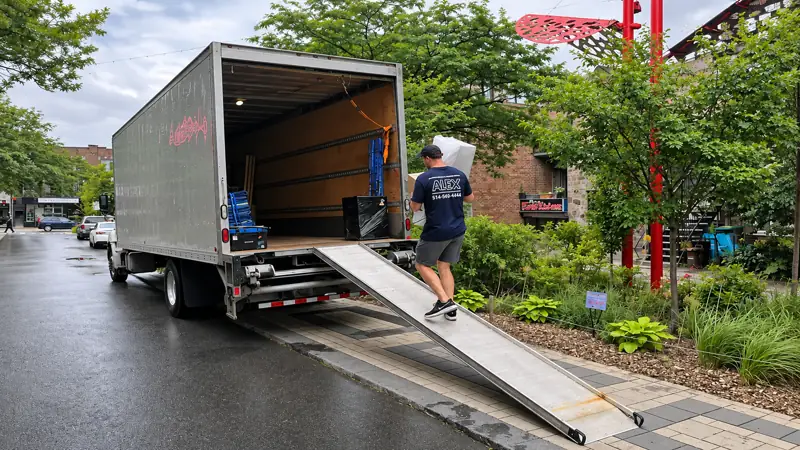
Agree on the division of packing work early. Your staff might prepare personal workstation contents while we handle selected furniture or other agreed items. Describe the rooms, supplies and fragile belongings involved through our packing and protection services.
Use sturdy boxes that can be closed and handled comfortably. Keep dense files and books in manageable containers. Label the destination clearly and identify the boxes needed first, without displaying confidential contents on the outside. Separate anything that must remain under your team’s direct control.
Before furniture is wrapped, we photograph it. Point out an existing mark, loose fitting or fragile finish during the initial review. Blankets, straps and suitable handling equipment support the agreed protection and loading plan. An unusual shape or narrow passage still needs to be assessed; protection alone does not solve a clearance problem.
Keep the loading route clear. Finished boxes, furniture staying behind and materials for the receiving site should be distinguishable without opening every carton or stopping the crew to ask.
Identify the desks, meeting tables, shelving and modular workstations that need furniture work. Include dimensions and photographs of the fittings when the configuration is unusual. A unit that fits the current room may need a different arrangement at the destination.
Our office furniture assembly service helps define the work to include with the move. Share the layout, workstation identifiers and any manufacturer instructions that are available. Explain which furniture is being reused, adapted or replaced so the crew is not preparing components that will no longer be installed.
Keep wall-mounted items, building fixtures and specialist equipment distinct from ordinary furniture assembly. Tell us what is attached, who will disconnect it and what work is required at the new premises. Large structures, unusual devices and heavy items need their own assessment; they should not be treated as a standard desk in the inventory.
At arrival, a person authorized to confirm placement should be reachable. Resolving a layout question before assembly can prevent a completed workstation from having to be taken apart and moved again.
Assign the technical work to your IT contact or equipment suppliers before the move. They should organize the appropriate backups, disconnection, reconnection and testing for the systems involved. Physical transportation does not automatically include configuration or putting a device back into service.
Label equipment and its accessories according to your team’s instructions. Identify fragile screens, unusual dimensions and any transport guidance provided by the supplier. Tell us what packaging is available and what protection needs to be planned, rather than assuming one packing method suits every device.
For records or other items requiring controlled handling, agree on the receiving person and handover procedure. Keep access credentials and technical documents with the people responsible for them. The inventory can identify a sealed container without exposing its contents to everyone involved in the move.
Finally, leave time for your technical team to check essential systems after delivery. A desk being in the right room and a workstation being ready for staff are two different checkpoints in the reopening plan.
Compare the inventory, crew, estimated work, travel charge, packing supplies and furniture work together. Ask whether the proposal covers one transfer or separate visits, and identify specialist handling before comparing totals. A floor-area price without a description of the load gives little help in preparing the actual move.
Our published local moving rate references provide a starting point for standard crew services: $110–$135/hour for two movers with a truck and $155–$185/hour for three, in low season before taxes. The usual working minimums are two and three hours respectively, plus a separate travel charge. Commercial access, equipment, requested work and timing must be assessed for the project; these references are not a fixed office package.
The current general travel brackets are based on the address concerned from our Montreal base: one hour up to 30 km, one and a half hours over 30 km through 50 km, and two hours or more beyond 50 km, according to distance. Local exceptions remain relevant. Your quote states the monetary travel charge separately; do not automatically multiply those hours by the working rate.
Illustrative single visit: five working hours at an assumed $175/hour produce an $875 working subtotal. Illustrative two-phase transfer: three hours plus four hours at the same assumed rate produce a $1,225 working subtotal. Add the agreed travel charges, materials, extra services and applicable taxes. These are arithmetic examples, not customer cases, guaranteed durations or fixed quotes. Check how separate visits affect the charging arrangement.
For standard local transport, see our local moving service. If the business is relocating to another region or province, use our long-distance moving service to discuss the load, route and delivery schedule.
At the new premises, check the placement against the current destination plan. Keep aisles and exits clear while delivery proceeds, and identify the area for empty packing materials. Opening every box at reception can obstruct the same route the crew still needs for furniture.
Review the transferred inventory and the agreed furniture work with your project contact before the crew leaves. Raise any concern while the team is present. Your technical contact can then carry out the systems checks and report what remains to be completed on their side.
Unpacking, additional furniture work and packaging handling should be identified before the move. If the new premises are not ready on the collection date, discuss storage and later delivery as a separate arrangement with the necessary access and receiving details.
Keep a short list of outstanding decisions, with a named person responsible for each. The handover is more useful when it distinguishes delivered furniture, completed moving work and technical tasks still awaiting another team.
An office in downtown Montreal, a shop in Anjou and professional premises in Saint-Laurent may involve different loading routes and building hours. Share the exact addresses and the access instructions, whether the transfer stays in one neighbourhood or crosses a bridge.
We discuss projects in Greater Montreal, including Laval, Terrebonne, the North Shore and the South Shore. For premises in Longueuil, Brossard or Boucherville, explain both the collection and receiving arrangements.
Send your date, reopening priorities, main inventory, furniture-work needs and access windows. For a short deadline, use our last-minute moving service to request an availability check. We can work through the remaining details with your project contact.
BEFORE THE BUSINESS MOVE
Send both addresses, the requested date, the main inventory, building access windows and reopening priorities. Include furniture work, packing, extra locations and photos of unusual items or passages. Name the contact who can clarify the project.
Describe the departments or rooms in each phase, what must remain usable and the building windows. We can review a phased plan against the inventory and available resources. Shared equipment and records need a clear order, too.
Explain the requested window and confirm that both buildings allow the work. Availability and the arrangement must be reviewed for your project, including access staff, elevator reservations, receiving contacts and any timing conditions.
Identify the desks, tables and other furniture needing work and share the destination layout. Include unusual fittings or manufacturer instructions. The scope is planned with the move; specialist fixtures or equipment require their own assessment.
Transport and technical recommissioning are different tasks. Your IT contact or supplier should organize backups, disconnection, reconnection and testing. Describe the equipment and transport requirements before booking so the physical handling can be planned.
Explain the rooms and items you want help with, and what your staff will pack. We can plan the agreed packing work and supplies with the transfer. Use consistent destination labels for both staff-packed and crew-packed items.
Use the destination floor, room or workstation number consistently on the inventory, floor plan and labels. Identify priority items and furniture staying behind. Avoid exposing confidential contents on the outside of a container.
Floor area is useful context, but furniture, boxes, equipment, disassembly and access determine the work. Include storage rooms and meeting areas. A sparsely furnished space and an equally large office full of cabinets need different assessments.
Check the loading entrance, elevator dimensions and booking, dock arrangements, parking, permitted hours and access contact. Ask about protective equipment and required documents. Share the instructions for both buildings before the moving schedule is finalized.
Yes. We photograph furniture before wrapping it. Point out an existing mark, loose fitting or fragile finish during the initial review, while the item is still visible, so the handling and protection can be prepared accordingly.
Describe what is collected or delivered at each location and when access is available. Storage and later delivery need a separate receiving plan. Include those requirements when requesting the move rather than adding them to an unchanged inventory.
A clear inventory, phased schedule and receiving plan can help organize disruption, but an interruption-free reopening is not a universal promise. Building access, furniture work and your technical team’s checks all need time in the plan.
CUSTOMER REVIEWS
Considering commercial moving in Montreal? Read customer experiences with Déménagement ALEX before discussing the scope, preparation and access required for your service.
Bravo à l’équipe de Nicolas, Sachas et Nikita. Super boulot!! 👍🏻👍🏻👍🏻
Équipe Nicolai et Sacha sont très professionnels
Excellent déménagement par Nikolas, Sasha et Vtalii. Très professionnel et rapide. Nous ont aidé dernière minutes quand nos autres déménageurs ont annulés.
Alexei and Nicolai provided excellent service. They arranged all my belongings very professionally and handled everything with great care. They even drove all the way to Gaspésie. I would have given them six stars if I could—highly recommended!
Rostik and Ilias: Great work from the guys. There on time. Everything went smooth!
Michael and Rostic did a great job helping me move. I recommend them
Commercial moving in Montreal · QUOTE
For commercial moving in Montreal, send Déménagement ALEX the details listed below. Describe the scope, items, addresses and access so the team can assess the work and confirm the services in your quote.
Confirm the details with Déménagement ALEX. Service and availability are assessed before booking.