
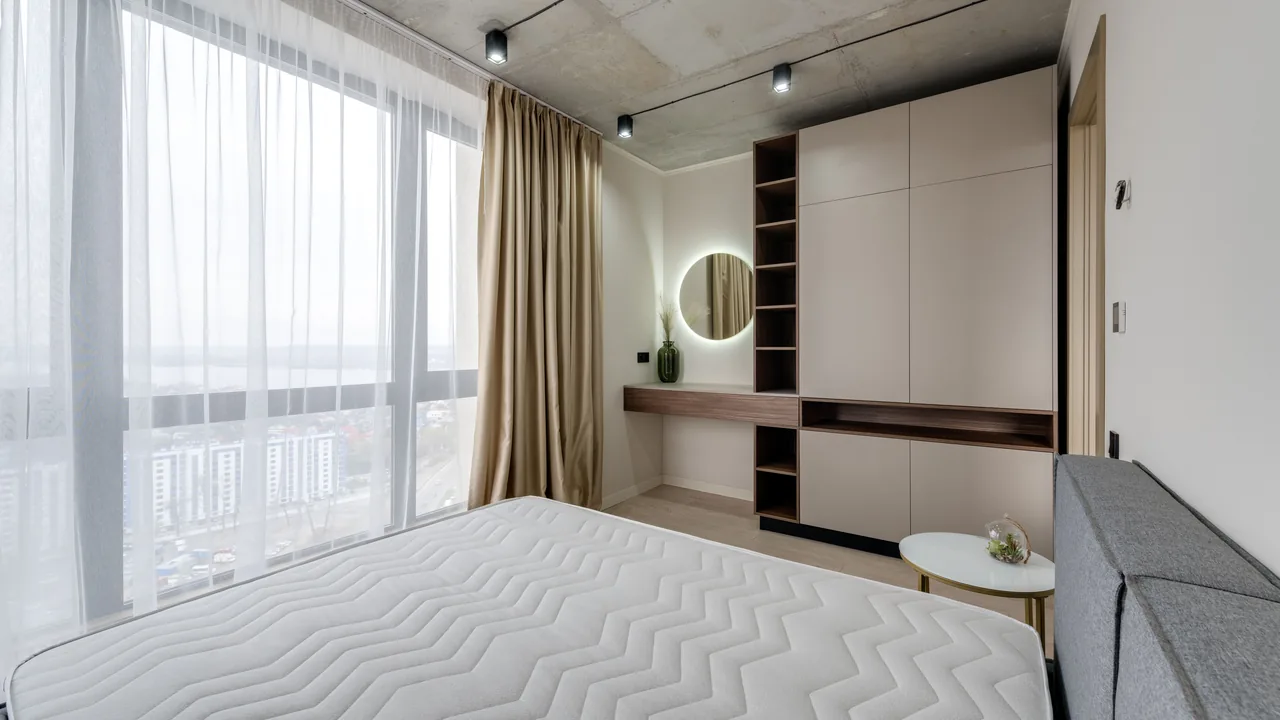
The best first impression is a home a buyer can understand. Clear rooms, accurate information and a well-organized visit help someone look beyond your belongings and consider the apartment itself. Preparing for sale is therefore as much about removing uncertainty as arranging furniture.
These twelve ideas focus on what a Montreal apartment owner can organize before and during the marketing period, then connect with the eventual move. They do not guarantee a sale date or price. The property, market, asking strategy and transaction conditions all matter.
Use the OACIQ seller’s guide for the real estate process and discuss transaction-specific questions with the appropriate professional. Déménagement ALEX’s Montreal moving teams can assess the physical move once the belongings, access and dates are sufficiently clear.
1. Define the apartment before planning its presentation
Start with an accurate description of what is being sold. A furnished photograph does not explain the property’s ownership arrangement, the space belonging to it or the status of a parking or storage area. Gather the information needed to describe those features correctly.
Do not treat “apartment” and “condo” as interchangeable legal descriptions. If the property is held in divided or undivided co-ownership, discuss the relevant documents and implications with the professional handling the transaction. An owner preparing to leave a rented apartment faces a different project from selling an owned property.
Make a working property sheet with the verified room information, associated spaces and questions still awaiting an answer. It helps the people involved use consistent facts. Keep personal documents separate from material intended for a public listing.
The result should be a straightforward explanation a buyer can follow without guessing what a photograph includes.
2. Discuss the asking strategy using relevant evidence
An attractive presentation cannot settle the question of an appropriate asking price. Treat that as its own decision, supported by relevant information and advice rather than an online headline or a neighbour’s account of a different sale.
The OACIQ explains the role of the broker in establishing the selling price. Ask what information is being compared, how the property’s condition and features are considered, and which assumptions need checking.
Prepare questions before a meeting. What makes a comparison relevant to this apartment? Which differences affect the analysis? When will the marketing approach be reviewed? A clear explanation is more useful than a promise that a particular number will produce a fast result.
Keep the asking decision separate from the amount you hope to spend on the next home. Both matter to your plans, but the second does not establish the market response to the first.
3. Build the document file early
Begin gathering documents before a visit produces an urgent request. Ask the broker or notary which material applies to this particular property, what must be current and where an updated document should come from. Keep a list of outstanding items and the person responsible for obtaining each.
For divided co-ownership, the file involves more than the private apartment. The OACIQ’s information on the newer divided co-ownership rules describes the certificate attesting to the condition of the co-ownership. Ask the professional and syndicate how the current requirements apply to the transaction.
Other relevant material may include the declaration of co-ownership, building rules, meeting minutes and information requested about the property. Confirm the actual list rather than assuming that another owner’s checklist is complete for your situation.
Use a dated, organized folder. When a corrected version arrives, make it clear which one is current so an older copy does not continue circulating.
4. Explain the property’s condition honestly
Cleaning and styling should make a home easier to assess. They should never be used to conceal a concern or substitute an attractive surface for an accurate explanation. Collect the facts about work performed and questions that still need a qualified answer.
The OACIQ’s guidance on declarations by the seller explains this part of a brokerage transaction. Follow the appropriate process and answer with the relevant information available to you. Ask how to handle a question you cannot answer reliably.
Keep invoices, reports and other supporting material organized where relevant. A vague statement that something was “redone recently” is less useful than a clear record of what was done and when.
If a condition needs investigation, deal with the underlying question before choosing a cosmetic response. The aim is a property that can be presented clearly, not a room in which difficult questions have simply become less visible.
5. Declutter to reveal how each room works
A buyer should be able to recognize the function of a room without mentally moving half its contents. Remove items that block circulation or make the space difficult to read. This does not require turning a lived-in apartment into an empty display.
Work in categories: keep for daily use, pack for the next home, donate or sell, and investigate. The last category needs a deadline. Otherwise, uncertain belongings tend to move from a visible surface into an already crowded cupboard.
Leave enough furniture to explain the room’s purpose and keep routes comfortable. Choose what to remove by its effect on the space, not by a rule that every personal object must disappear.
The downsizing guide can help if the next home will be smaller. Decide the destination of unwanted items early so preparing the sale also reduces unnecessary work on moving day.
6. Clean and maintain with a clear order of priority
Begin with the entrance, circulation routes, kitchen and bathroom, then work through the rest of the apartment. Look at details a visitor will naturally notice: the state of a work surface, a door that sticks or a light that no longer works.
Create separate lists for routine cleaning, small maintenance and questions requiring a qualified professional. Keeping those categories apart prevents a larger concern from being treated as another quick weekend task.
Before spending on decorative changes, ask what problem the work would solve. A clean, usable room may benefit more from removing an awkward item than adding a new decorative one. Avoid assuming a renovation will be recovered through the sale.
For common areas, follow the building’s arrangements. An owner can prepare their own home while still coordinating appropriately about a shared entrance or corridor. Do not store preparation materials where they interfere with another resident’s access.
7. Photograph the apartment accurately
Plan photographs after the main sorting and cleaning. Open the routes through the rooms, remove distracting temporary items and decide which view best explains each space. The goal is an informative sequence, not a collection of unrelated close-ups.
Discuss with the photographer how to show room connections, natural light and relevant features faithfully. Images should help a visitor recognize the apartment on arrival. Avoid editing that misrepresents the property or leaves a misleading impression of its condition.
Check the background for sensitive details before publication: visible personal documents, identifying information and private photographs that the household does not want shared. Keep the public description focused on the property.
A useful final review is to follow the images as someone who has never visited. Can they understand the relationship between the entrance, living space and other rooms? Are important features described clearly rather than left to interpretation?
8. Describe everyday use, not just decorative features
A listing becomes more helpful when it explains verified features in plain language. Instead of relying on broad adjectives, describe the actual layout, relevant storage and other confirmed characteristics. Ask the broker to check that the wording matches the property documents.
Be precise about inclusions and exclusions. A visible appliance or light fixture can be interpreted differently by different people. The OACIQ’s explanation of a promise to purchase discusses these transaction details. Resolve them through the proper agreement rather than relying on a photograph.
Keep neighbourhood descriptions verifiable. Avoid unsupported claims about the best schools, guaranteed journey times or universal parking convenience. A nearby destination can be identified without promising how every household will use it.
Read the description against the image sequence and property sheet. Correct inconsistencies before they become questions that have to be answered separately during every visit.
9. Make visits easier for the household and visitors
Agree on a practical visit process with the person coordinating the sale. Establish how requests will be communicated, what notice arrangements apply and how the apartment will be accessed. Do not improvise a different system for every appointment.
Prepare a short repeatable routine: clear the main surfaces, make circulation comfortable, secure private documents and follow the agreed arrangements for pets and household members. A routine is easier to sustain than a full presentation project every time.
Keep the household’s needs visible. Work schedules, children and animals may require coordination. Discuss the plan early instead of assuming everyone can leave at short notice.
Do not try to answer a technical or transaction question by guessing during a visit. Record it and direct it to the appropriate person. A reliable follow-up is more helpful than a confident response that later needs correction.
10. Use feedback to identify a specific next action
Ask for feedback through the agreed channel, then look for a concrete issue rather than reacting to every opinion. One visitor’s taste does not establish a defect in the presentation. Repeated confusion about a room, feature or document may point to something worth clarifying.
Separate comments about presentation from questions about the property and discussions about price. They need different responses. Moving a bulky chair may improve a route; it does not answer a question about the building’s documents or the asking strategy.
Keep a small review record with the concern, the evidence and the next action. Decide with the professional when to revisit the marketing approach. Avoid repeatedly changing several things at once without understanding what question each change addresses.
Preparing well is work you can control. The timing and terms of a buyer’s decision are not. A calm review process helps the household remain organized while the property is being marketed.
11. Coordinate the move with confirmed possession arrangements
A prospective sale date, signing date and agreed possession arrangement should not be treated as one interchangeable instruction. Ask the professional handling the transaction to clarify what has actually been agreed and which conditions or dates still need confirmation.
Use that information when discussing moving availability. Déménagement ALEX’s teams need the proposed date, both addresses, inventory and access conditions. Explain an unresolved receiving arrangement clearly rather than presenting it as settled.
For a condo, identify the building’s instructions for moving, elevator arrangements and available loading access. Coordinate at the destination too. An easy departure does not guarantee that the receiving building is ready.
The moving preparation guide helps organize the physical tasks. Keep the transaction documents accessible separately from cartons so a request for information does not require opening packed household belongings.
12. Prepare the handover before the final rush
As the move approaches, turn the agreed arrangements into a practical handover list. Confirm which belongings leave, which inclusions remain and how keys or access items will be dealt with through the appropriate process. Recheck uncertainties with the professional rather than interpreting the agreement alone.
Walk through storage areas as well as the main rooms. It is easy to remember a sofa while overlooking items in an associated locker or another space. Keep a final inventory of what still needs collecting.
Arrange personal account and address updates separately. The address change checklist helps distinguish these tasks from the property handover. Do not assume the sale process updates every provider or organization automatically.
Leave enough time to review the apartment after removal. Report an unexpected issue through the agreed channel. A well-organized departure finishes the preparation that began before the first photograph.
A simple preparation board for the household
Keep one current record instead of several overlapping lists. Assign an owner to each task and mark the difference between completed, awaiting an answer and not yet started. This makes it easier to see what is actually holding up the next step.
| Area | Useful deliverable | Next checkpoint |
|---|---|---|
| Property facts | Verified description and open questions | Professional review |
| Documents | Current file and missing-item list | Confirm applicable requirements |
| Presentation | Clear routes and accurate photographs | Listing review |
| Visits | Repeatable household routine | Structured feedback |
| Departure | Inventory, access and agreed dates | Receiving and handover confirmation |
For example, an owner may finish decluttering while still waiting for a building document. More decorating will not resolve that missing item. Identifying the responsible contact and following up on the request is the useful next action. This example illustrates organization rather than a transaction timetable.
Questions about preparing an apartment for sale
Will these steps guarantee a quicker sale?
No. They help organize presentation, information and departure. Sale timing and terms depend on the property, market and transaction circumstances.
Should furniture be removed before photographs?
Remove what obscures the space or blocks circulation while retaining a clear sense of how the rooms function. Discuss the photographic presentation with the professional involved.
Do all apartments need the same sale documents?
No. The ownership arrangement and property matter. Confirm the applicable documents and current requirements with the broker or notary.
When can the moving arrangements be assessed?
Share the intended dates, addresses, inventory and access information, identifying any possession or receiving arrangements that remain unconfirmed.